
How to Measure an Old Flag Before Ordering a Replacement
A worn flag can look like the wrong size, especially when the edge farthest from the pole has frayed or been trimmed. Before ordering a replacement, write down three things: the finished size of the old flag, how it attaches, and the largest flag your current pole and hardware are rated to carry.
1. Measure the flag flat, not on the pole
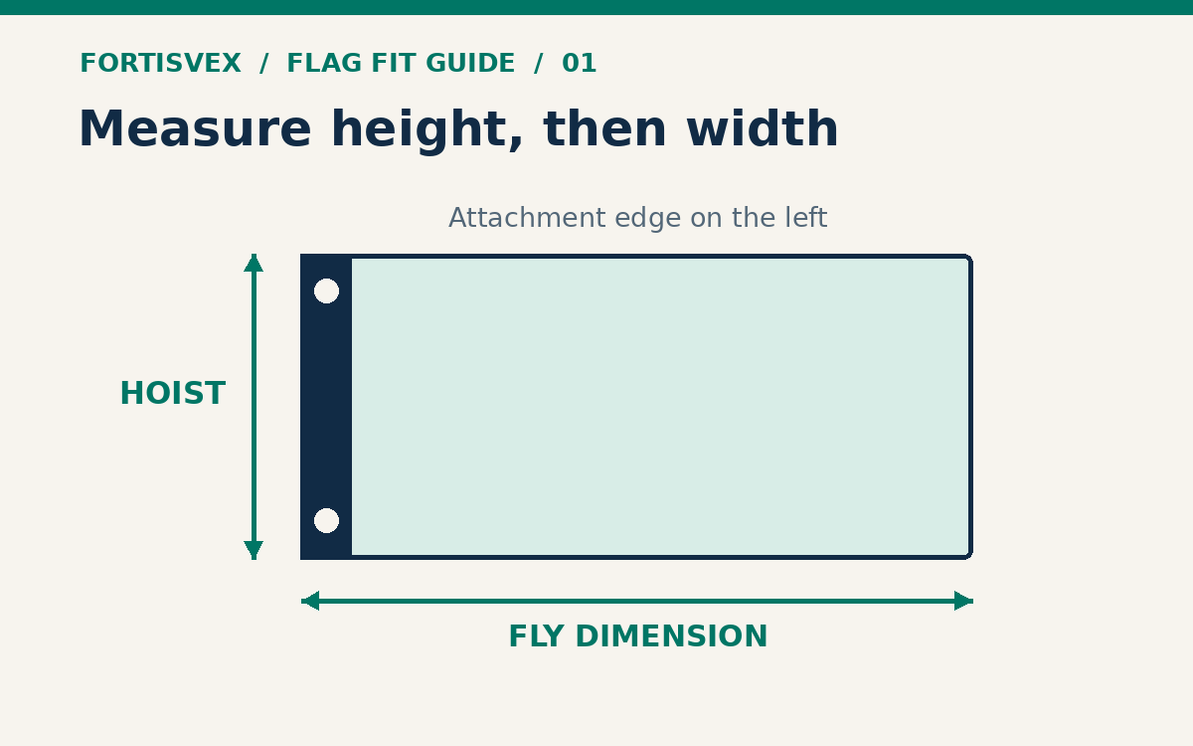
Bring the flag down using your pole's normal procedure, then lay it on a clean, flat surface. Smooth out folds without stretching the material. With the attachment edge on your left, measure from its top to bottom first. Then measure across the flag from that edge to the opposite edge.
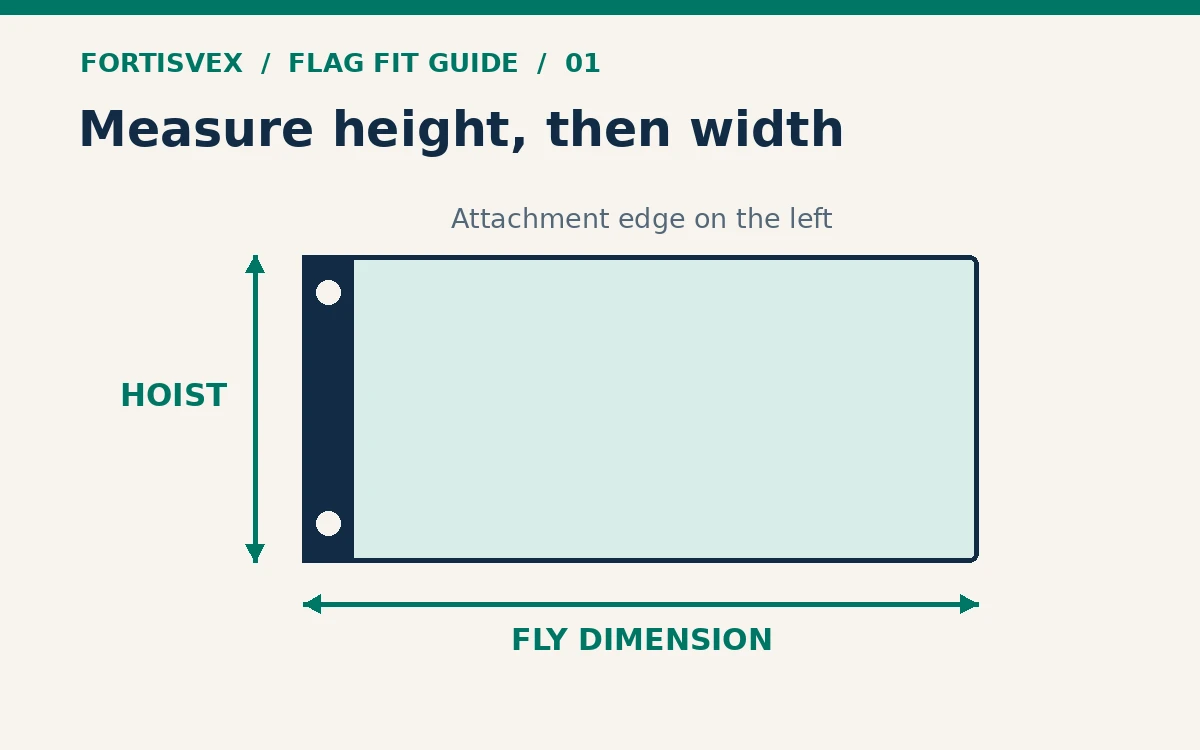
- Hoist: The edge nearest the pole. Use this edge to measure height.
- Fly: The direction away from the pole. Measure the width across the flag to the far edge.
For example, 36 inches high by 60 inches wide is 3 by 5 feet. At 48 inches high by 72 inches wide, it is 4 by 6 feet. Check the listing's dimensions rather than relying on abbreviations alone. The 3-by-5-foot New York flag and the 4-by-6-foot nylon U.S. flag are examples of those two different sizes.
2. Check whether the far edge is still intact
If the outline is still rectangular, record both finished dimensions. If the fly edge is ragged, check more than one point across the fabric. A missing corner or ragged edge makes that width an estimate, not proof of the original size.
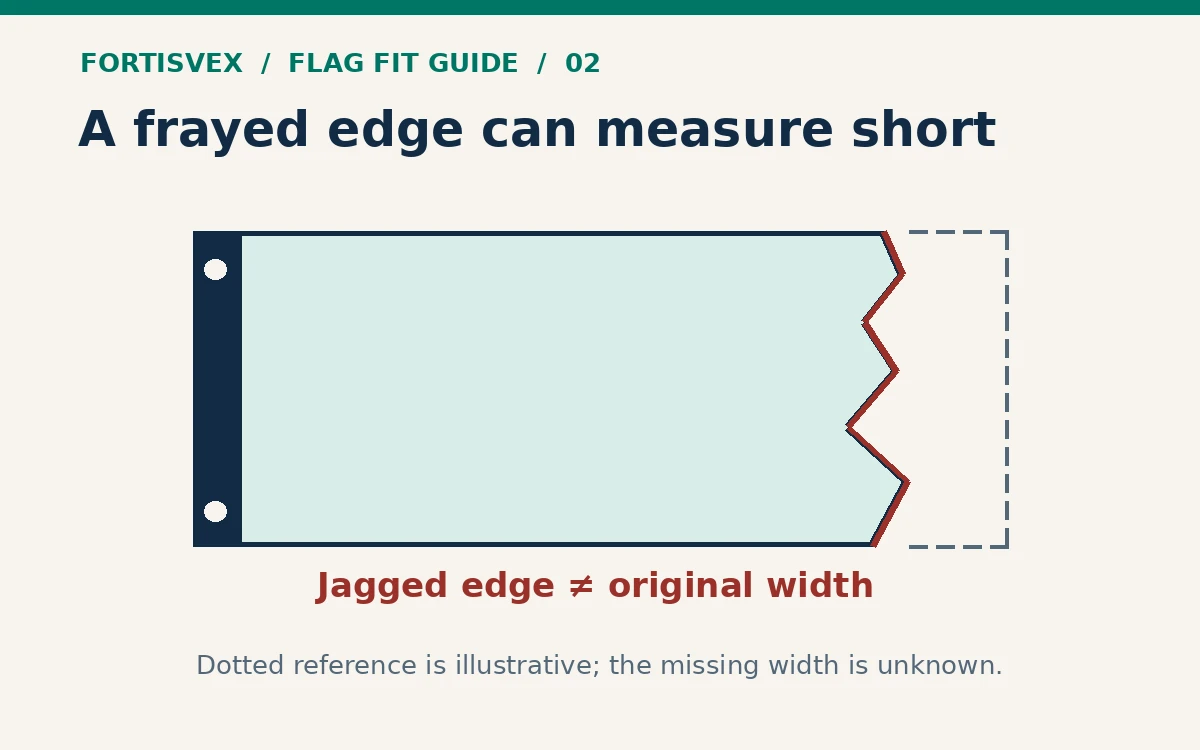
Check the sewn label for a size or item number, look up the old order, or find the specifications for an identical intact flag. Do not round up from a damaged measurement if that would increase the load on your setup. If the original size remains unclear, check the flagpole manufacturer's guidance before choosing a replacement.
3. Match the attachment before you order
Look at the attachment edge itself. Grommets are reinforced holes for compatible clips, snap hooks or flag rings. A pole sleeve, also called a pole hem, is a fabric channel that slides over a compatible pole; some sleeves have a tab that connects to a retaining screw or clip. On a rope-and-thimble flag, match the existing connection to the hardware specified for that setup rather than assuming it works like a two-grommet flag.

For a sleeved flag, confirm the opening and whether the tab matches your pole's retainer. For a grommeted flag, check that your clips or rings fit the holes and can be positioned to support the flag without bunching the heading. For comparison, the 3-by-5-foot New York flag with a pole hem has the same dimensions as the grommeted New York flag above, but uses a different attachment.
Before you order
Record the height and width, attachment type, and the pole or bracket maker's recommended flag size. Check that the flag has room to swing clear of walls, eaves and nearby branches. If you're considering a larger flag, do not use the old flag's fit as evidence that your pole, bracket or attachments can carry the larger one.
Recent Posts
-
How to Measure an Old Flag Before Ordering a Replacement
A worn flag can look like the wrong size, especially when the edge farthest from the pole has frayed …Nov 24th 2026 -

Cranberry-Orange Upside-Down Cake
Fresh cranberries go into the bottom of the pan, then become the top when you turn the cake out. The …Nov 24th 2026 -

Slow-Cooker Butternut Squash and Black Bean Chili with Charred Poblano
Char a poblano while you prep the squash, then let the slow cooker do the simmering. Tender butternu …Nov 24th 2026