
Custom Flag Artwork: What to Check Before Approving a Proof
A custom flag proof should answer the questions that are expensive to discover after printing: Is the wording right? Which edge attaches to the pole? What appears on the reverse? Before approving artwork, make a short written specification and compare the proof against it.
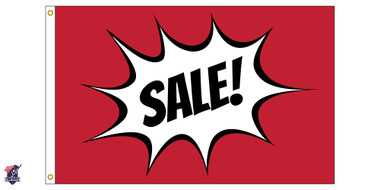
Send the original artwork when you have it
Eder's custom flag artwork requirements identify vector artwork, outlined fonts and strokes, and PDF, AI or EPS files. Its guidance also calls for checking spelling and supplying solid coated Pantone references for color matching. Confirm the requirements for your actual order rather than assuming every supplier accepts the same files.
A file extension alone does not prove the artwork is usable. A PDF can contain a small screenshot rather than editable vector artwork. If all you have is a photograph of an old flag or a web logo, say that at the outset and ask what preparation is needed. Do not simply rename the file.
Review content independently of appearance
- Read every word, including small text in seals and logos.
- Check dates, phone numbers and website addresses character by character.
- Compare the logo with your approved brand artwork.
- Confirm you have permission to reproduce the artwork supplied.
- Remove temporary notes, placeholder text and unwanted backgrounds.
Have another person read the wording if possible. It is easy to overlook an error in a design you have reviewed repeatedly. Keep one final approved version rather than sending several nearly identical files without identifying which one controls.
Mark orientation and the attachment edge
Write the finished height and width with units. Label the edge that attaches to the pole and identify the requested mounting finish. Ask the proof to show both faces, or state clearly how the reverse will appear. A business name readable on the front does not establish that it will read the same way on the back.
The FORTISVEX 6-by-10-foot single-sided custom flag is a specific example of a listed size and construction. Do not use its specifications as a default for a different size or display.
Approve only what has been resolved
Check color references rather than relying solely on a phone screen. Ask which production details the proof represents and which require separate written confirmation. Record the quantity, dimensions, finish, construction and approved artwork filename together.
If a deadline matters, request a confirmed production and delivery plan before committing. A proof approval is not a shipping guarantee. The most useful approval is clear about what is final and leaves no unresolved notes hidden in the artwork.
Recent Posts
-
Choosing Standard or Deluxe Flag Arrangements
If you are replacing the hardware that connects a flag to an internal-halyard cable system, start wi …Oct 24th 2026 -
Custom Flag Artwork: What to Check Before Approving a Proof
A custom flag proof should answer the questions that are expensive to discover after printing: Is th …Oct 24th 2026 -
Why Does a Flag Look Backward on the Reverse Side?
You turn a flag over and its lettering reads backward. That does not automatically mean the flag was …Oct 24th 2026