
Charcoal Weber Kettle Tri-Tip with Cider-Pepper Mop Sauce
A peppery crust and a sharp, lightly sweet mop give this sliced roast two distinct flavors. The mop goes on during the indirect finish, not over the searing coals. This is one complete tri-tip recipe, including its sauce—not two articles. Serves 6. Allow about 20 minutes preparation, 35–60 minutes cooking and 10 minutes resting, plus fire preparation. Thickness and kettle temperature can move the cooking time outside that estimate.
An original FORTISVEX recipe formulation informed by published Weber charcoal methods and USDA safety guidance. This recipe is inspired by charcoal-kettle barbecue. Timing is an estimate and a thermometer governs doneness.
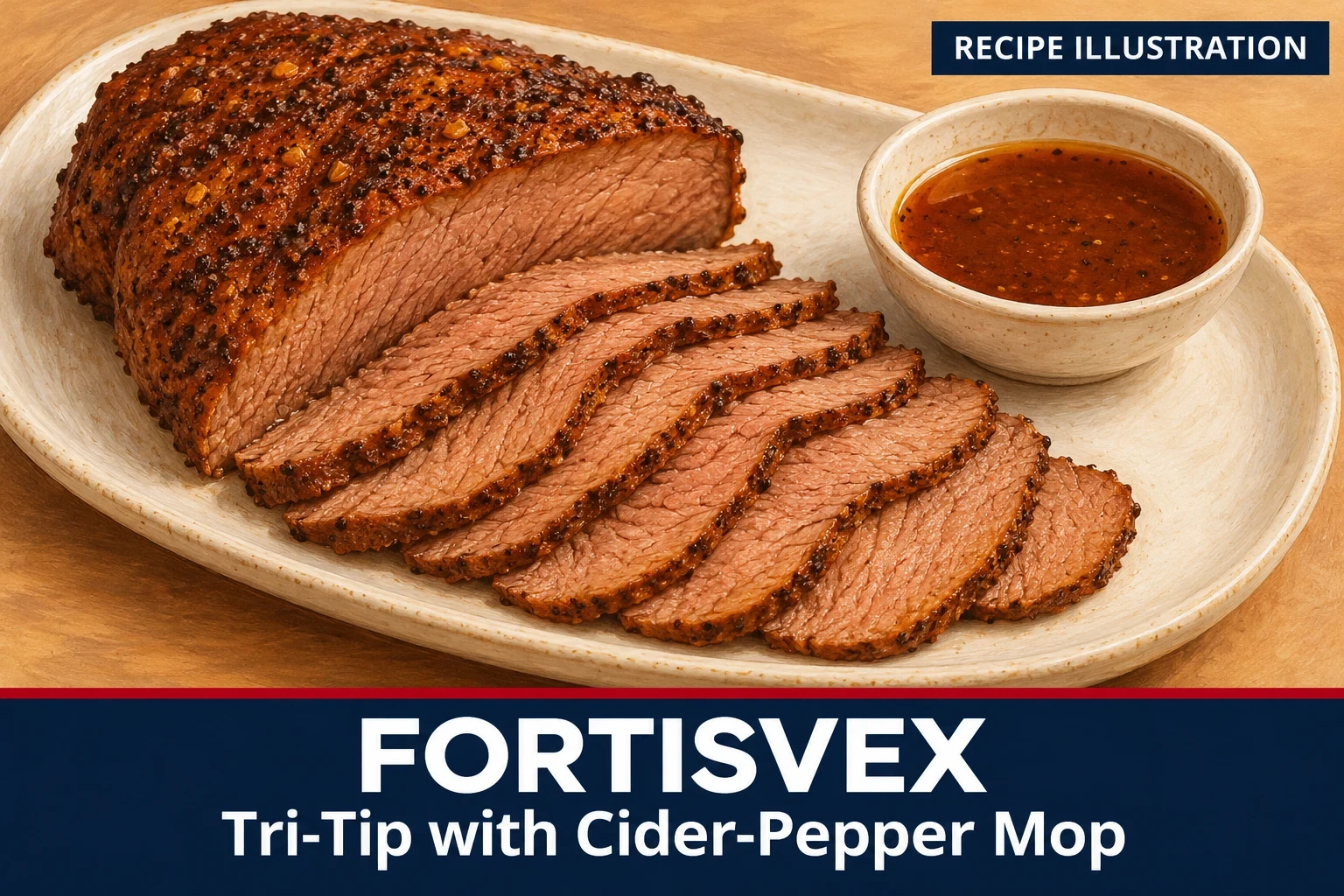
Ingredients
- One 2½–3 lb trimmed tri-tip roast
- 9 g kosher salt, weighed because crystal sizes vary
- 2 tsp coarsely ground black pepper
- 1 tsp garlic powder
- 1 tsp smoked paprika
- 1 tbsp neutral cooking oil
- Mop: ⅓ cup cider vinegar, ⅓ cup water, 1 tbsp Worcestershire sauce, 2 tsp brown sugar and ½ tsp black pepper
Equipment
Charcoal Weber kettle large enough for the stated indirect area; charcoal and chimney starter; grate-level grill thermometer; instant-read food thermometer; long tongs; heatproof gloves; clean tray and board. Add a drip pan, foil and small grill-safe saucepan where the instructions call for them. Also have a heatproof basting brush and two separate sauce vessels for working mop and untouched serving sauce. All temperatures below are Fahrenheit.
Method
- Prepare the roast. Blot the roast dry with paper towels. Look at the direction of its muscle fibers before applying seasoning; tri-tip can change grain direction across the roast. Combine salt, pepper, garlic and paprika, lightly oil the meat and distribute the rub over both faces. Refrigerate while you prepare the fire.
- Build a two-zone charcoal fire. Use a charcoal Weber kettle outdoors, with charcoal banked on one side. Put the drip pan on the lower charcoal grate in the charcoal-free area; after searing, the roast will finish on the upper cooking grate above it. Preheat with the lid closed. Aim for roughly 350–400°F at the indirect cooking area. Keep a clean cooking grate, a leave-in or instant-read thermometer, long tongs and heatproof gloves ready. The unlit side is essential: it gives the roast somewhere to finish without burning its surface.
- Make the mop and keep a clean portion. Stir the five mop ingredients in a small saucepan. Set the pan over the kettle’s indirect area once the grill is hot, bring to a simmer and stir until the sugar dissolves. Move it with heatproof gloves to a safe surface. Before any brush touches meat, pour half into a clean covered serving container. The other half is the working mop; do not pour it back into the reserved sauce.
- Brown, then move away from the coals. Sear the roast over the lit side, turning as needed until both broad faces are browned, approximately 2–3 minutes per face as a starting estimate. Move it sooner if fat flares. Place the roast over the drip pan and close the lid. Begin checking the thickest section after about 20 minutes of indirect cooking.
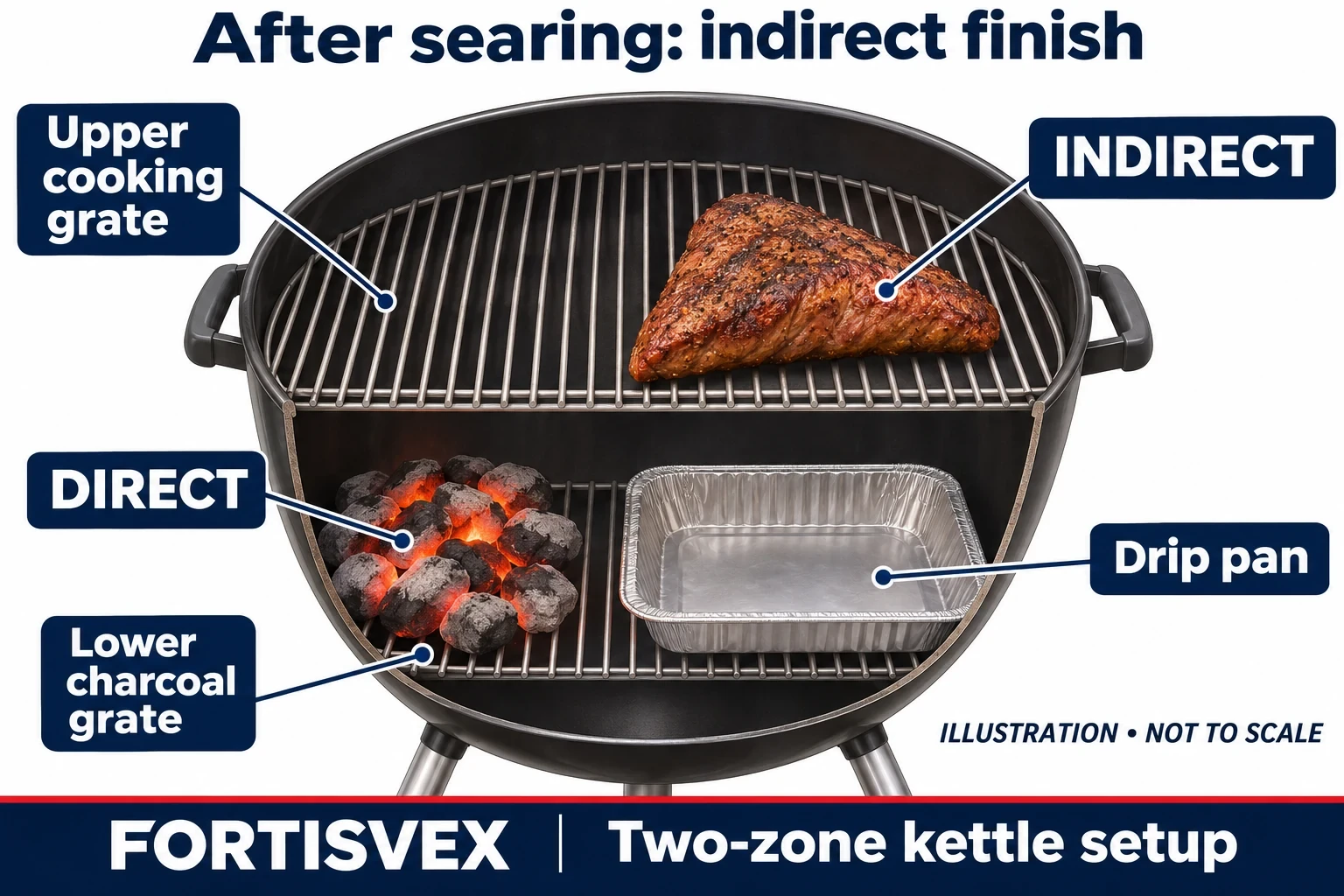
After searing, finish over the charcoal-free side. Original FORTISVEX illustration; cutaway is not to scale. Close the lid during cooking as directed in the recipe. - Mop lightly and measure. Brush a thin coat of working mop on the roast during the indirect stage; one or two applications are enough for this recipe. Avoid soaking off the crust or repeatedly opening the lid. Cook to at least 145°F in the thickest lean section before removing it, checking more than one spot. Do not use crust color or elapsed time as the safety check. Discard remaining working mop and wash the brush.
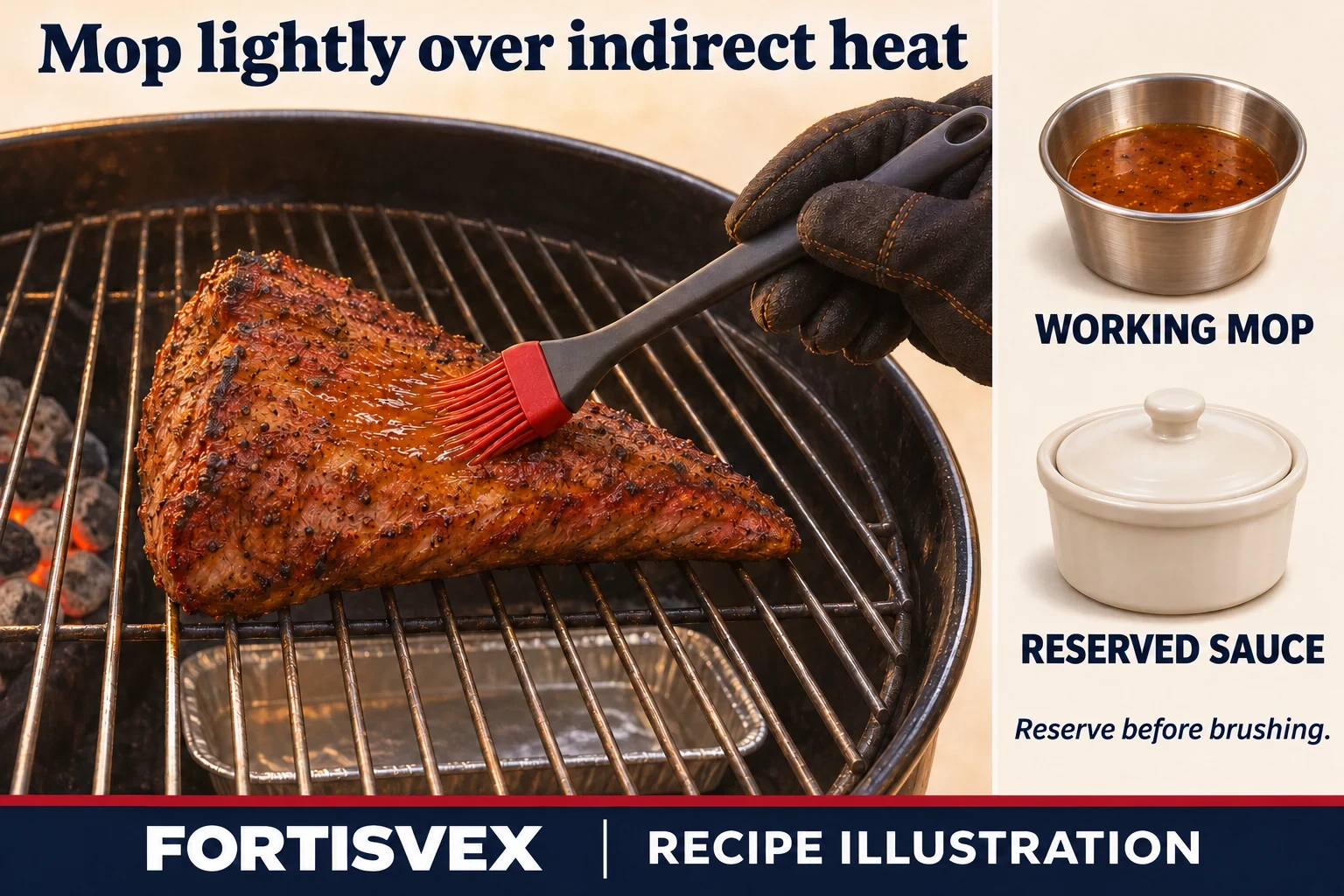
Reserve the serving portion before brushing; use only the working mop on the roast. Original FORTISVEX recipe illustration. - Rest, slice and serve. Rest on a clean board for 10 minutes, exceeding the required 3-minute rest for this whole beef cut. Divide the roast where the grain changes, then slice each section thinly across its fibers. Spoon a little of the untouched reserved mop over the slices, with the remainder alongside. Serve with beans and a crisp cabbage salad; the acidic sauce is intended to brighten the meat, not drown it.
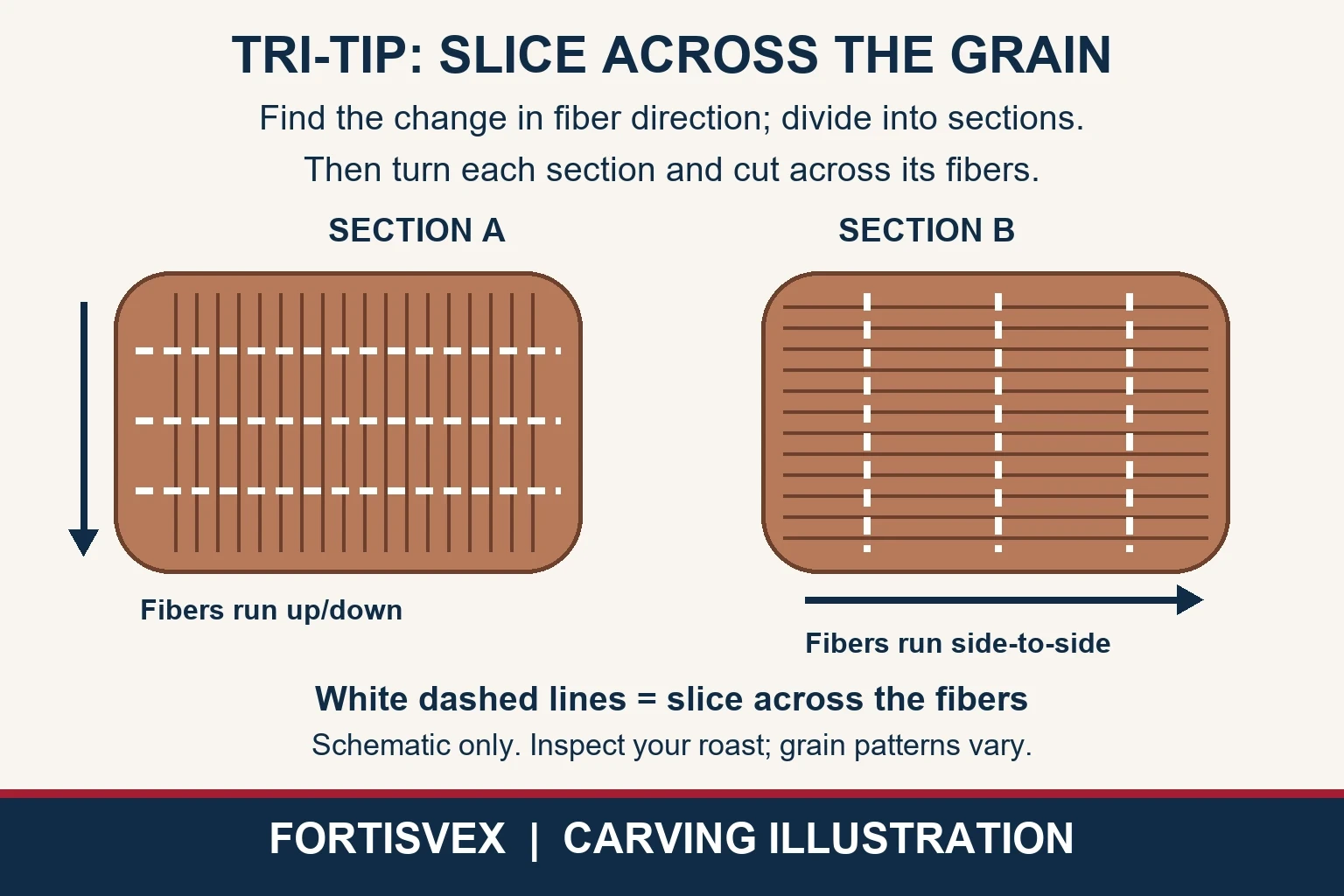
Inspect your own roast and divide where its grain changes, then slice each section thinly across the fibers. Schematic only; grain patterns vary.
What to Watch For
If the exterior browns too quickly, move farther from the coals; do not lower the final safety endpoint to rescue the crust. A thick roast may need considerably longer than a thin one. Worcestershire sauce commonly contains fish and may contain other allergens: check its label. This recipe deliberately uses USDA’s 145°F-plus-rest endpoint rather than the lower medium-rare endpoint found in some grill recipes.
Leftovers
Refrigerate promptly in shallow containers: within 2 hours, or 1 hour above 90°F. Reheat leftovers to 165°F. Do not leave the serving platter outside throughout the gathering.
Plan the Gathering
If this cookout marks a statehood anniversary, use the FORTISVEX state-birthday calendar to check the date. Set up any display separately from the cooking area; a celebration does not change charcoal safety clearances.
For that state-themed gathering, browse FORTISVEX state flag collections, or choose your state on the shopping map. These are display-planning resources, not cooking instructions.
FDA outdoor serving and handling guidance.
Method and Safety References
- Weber method reference (method evidence, not a claim of Weber endorsement).
- USDA safe internal temperatures.
- USDA time and temperature guidance.
Recent Posts
-
Tofu and Broccoli Rice Bowls with Ginger-Garlic Sauce
FORTISVEX · RECIPES A good tofu bowl has more than one texture: golden edges on the tofu, broccoli …Nov 4th 2026 -
Placing an Indoor Flag Display: A Venue-Review Worksheet
An indoor flag display can fit its stand and still be poorly placed in a room. The base occupies on …Nov 4th 2026 -
Charcoal Weber Kettle Cauliflower Steaks with Lemon-Caper Dressing
A cauliflower steak needs two things: enough of the central stalk to hold together and enough cooki …Nov 4th 2026