
FORTISVEX
FORTISVEX Washington State Flag 5x8 Feet Nylon - Made in USA with Brass Grommets

- MPN:
- FPAMSTWANYL5x8G
- Availability:
- Free Shipping* https://fortisvex.com/shipping-returns-terms/
- Shipping:
- Calculated at Checkout

Description
The 5x8 foot flag belongs on a thirty foot commercial flagpole — a dealership, a bank, a fire station, a church, a school. It also suits a homeowner whose flagpole is too tall for a 4x6 foot flag to fill properly.
This is the Washington state flag at 5x8 Feet (40 square feet) in nylon, made in the United States and finished with brass grommets.
Built to the Washington flag specification
The Washington flag is set out in Revised Code of Washington 1.20.010. It is a dark green field with the state seal carrying a portrait of George Washington.
Adopted in 1923 and standardized in 1967.
Washington regulates by ratio rather than by size. WAC 434-04-017 sets a one to one point six flag ratio with seal diameters given for the 3x5 foot, 4x6 foot and 5x8 foot sizes, and the state runs a competitive bid to that specification. The law is written around the standard commercial sizes rather than against them.
This flag reproduces the design faithfully, built to the standard outdoor sizes used across the industry and bought by the states themselves. The colors, the seal and the emblems are the part that has to be right on an outdoor flag, and they are right here.
The law that defines it, in its own words
Revised Code of Washington 1.20.010 reads:
The official flag of the state of Washington shall be of dark green silk or bunting and shall bear in its center a reproduction of the seal of the state of Washington embroidered, printed, painted or stamped thereon. The edges of the flag may, or may not, be fringed. If a fringe is used the same shall be of gold or yellow color of the same shade as the seal. The dimensions of the flag may vary.
Washington Administrative Code 434-04-017 adds the sizing rule: identical seals on each side, a 19 inch seal on a 3x5 foot flag, 25 inches on a 4x6 foot flag, 31 inches on a 5x8 foot flag, and in all other cases a seal one third the flag length on a flag with a height to width ratio of one to one point six.
You do not have to take our word for any of that. Read Revised Code of Washington 1.20.010 in full at the Washington State Legislature, and check what we sell against it.
This is what we actually make, not a stand-in for it.
What is on it and what it means
The seal portrait is based on a Gilbert Stuart painting. The seal itself was designed in 1889 by the Olympia jeweler Charles Talcott.
Worth knowing about this flag
A bill directs a redesign recommendation by July 1, 2028, subject to referendum. Nothing has changed yet, and the green field with the Washington portrait remains the flag.
It is the only state flag with a green field, and the only one depicting a United States president.
Where the Washington flag flies
An eighty by forty foot flag flies on a hundred and twenty foot pole at a recreational vehicle consignment business in Burlington along Interstate 5. Regional rather than a claimed state record. A historic episode worth using: at Camp Lewis in Pierce County in 1918 a three hundred and fourteen foot Douglas fir pole and a sixty by ninety foot flag attempted a world record, and the pole broke.
Fly it on Washington’s birthday
Washington became the 42nd state on November 11, 1889. Under the United States Flag Code as amended July 7, 1976, a state flag flown on the state’s birthday takes its place beneath the United States flag, and that day is the one date every year the Washington flag has an official reason to go up.
Order ahead and this flag is ready for the day. The complete list of state birthdays lives on our state birthdays page.
Nylon or polyester in Washington
Nylon in the sheltered Puget Sound lowland at Seattle and the Spokane interior. Polyester on the Pacific coast and in the wind prone Columbia Basin.
Forty square feet puts real load on the heading in any gust, and an exposed site from the list above will show the difference between materials inside a single season.
The nylon is what you are looking at here — the right choice for the sheltered and moderate wind sites named above, for a house bracket, and for anywhere the flag comes down ahead of storms. Two things settle it. It is light enough to fly on an ordinary yard’s breeze rather than sag, and it dries fast, fighting mildew in humid conditions. What it gives up is resistance to ultraviolet — nylon’s amide bonds break under sun, costing strength and color faster than polyester, and it loses roughly a tenth of its strength while wet. If the site is one of the exposed ones above, the polyester version fits better.
One more thing that decides it, and it is the part people only learn after buying twice: a nylon flag flies on days a polyester flag will not. If the flag matters to you on a still morning, on a holiday, at a funeral, at a ceremony, that is an argument for this one even on a site where the polyester would last longer. A flag that hangs is not doing its job either.
The benchmark institutions generally lean on comes from the American Legion: the federal government's own expectation is about ninety days for a daily sunrise-to-sunset flag, and roughly a quarter of that flying around the clock. Retailers report three to six months for nylon flown daily, four to eight months for polyester, and one to three years for occasional flying. Treat those as working estimates rather than a warranty, since exposure can shift them a great deal.
How the 5x8 Feet is built
Forty square feet is real work for a flag, and this one fails where everyone can see it. A frayed tip on a business flagpole shows from the road — which is exactly why the flag is flying.
Work the numbers and you get 40 square feet of nylon at roughly two ounces a square yard. At thirty miles an hour, the fly end actually outpaces the wind, because the wave running to the tip accelerates along the way — the reason the tip fails first, and the reason fly-end stitching count is the number that matters.
Two people is easier than one at this size, particularly on a windy site. Forty square feet of loose material catches wind while you are folding it.
With lock stitching, every stitch knots into its neighbor, so damage stays contained at the break instead of running down the seam. Read 4 rows not as 4 times the strength but as 3 backups. This size steps the heading up to two inches, heavy duty white and reinforced, with brass grommets and tooth washers. Forty square feet in a gust pulls hard, and that extra half inch of heading earns its place.
This flag is commercial grade nylon, light enough to move in a gentle breeze, and it sheds water instead of soaking it up, drying fast — which matters, since a wet flag is a heavy flag that works its own seams harder. UV resistant, field tested ink is what stands between the flag and the sun, since sun is what fades a flag over time.
Why this flag is harder to make than most
A recognizable human portrait printed on both faces of a green flag. It is the most expensive state flag to reproduce accurately, because a portrait that is slightly off does not look approximate, it looks wrong.
For what it is worth, the North American Vexillological Association surveyed 72 state, provincial and territorial flags in 2001 and rated them from zero to ten. The Washington flag placed 47, at 4.53 out of 10.
Will it fit my flagpole?
This size belongs on an in-ground flagpole between twenty five and thirty five feet — the standard commercial setup.
Questions about the 5x8 Feet
What size flagpole for a 5x8 foot flag? Twenty five to thirty five feet in the ground, which is the standard commercial flagpole. This is the size on most dealerships, banks and fire stations.
Should a business choose nylon or polyester at 5x8 Feet? Nylon flies more often and looks better on a calm day. Polyester lasts longer on an open, windy or coastal site. The section above names which your state is.
How often does a 5x8 foot commercial flag need replacing? A flag flown daily on an exposed commercial flagpole is typically replaced two to four times a year. A rotation of two flags swapped monthly stretches that.
What the condition of it says
Before the building registers, the flag does — that is what anyone driving past a business sees first. A frayed, faded flag communicates something, and the cost of that is separate from what replacing it would run.
Specifications
- Size: 5x8 Feet
- Area: 40 square feet
- Material: 100 percent nylon
- Fly end: 4 rows of lock stitching
- Heading: heavy duty white, reinforced, 2 inch
- Finish: Brass Grommets
- Ink: UV resistant, field tested
- Made in the United States by FORTISVEX
Which size do I need?
Both tables follow the same logic. A flagpole reads best with a flag whose length falls between a quarter and a third of its height. Where a size could go either way, smaller means more flying days and a longer life, bigger means more visibility at range.
If you know your flagpole height, start here.
- 6 Feet house bracket: 2x3 Feet or 3x5 Feet
- 15 to 20 Feet flagpole: 3x5 Feet or 4x6 Feet
- 20 to 25 Feet flagpole: 4x6 Feet or 5x8 Feet
- 25 to 35 Feet flagpole: 5x8 Feet or 6x10 Feet
- 35 to 45 Feet flagpole: 6x10 Feet or 8x12 Feet
- 45 to 60 Feet flagpole: 8x12 Feet or 10x15 Feet
- 60 to 80 Feet flagpole: 10x15 Feet or 12x18 Feet
- 80 to 100 Feet flagpole: 12x18 Feet or 15x25 Feet
- 100 to 120 Feet flagpole: 15x25 Feet or 20x30 Feet
- 120 to 150 Feet flagpole: 20x30 Feet or 20x38 Feet
- 150 to 200 Feet flagpole: 20x38 Feet or 30x50 Feet
- 200 to 240 Feet flagpole: 30x50 Feet or 30x60 Feet
- 240 Feet and above: 30x60 Feet or 50x80 Feet, engineered to the flagpole
If you know your flag size, start here.
- 2x3 Feet: 4 to 8 Feet bracket or garden flagpole
- 3x5 Feet: 6 Feet bracket, or 15 to 20 Feet in-ground flagpole
- 4x6 Feet: 18 to 25 Feet in-ground flagpole
- 5x8 Feet: 25 to 35 Feet flagpole
- 6x10 Feet: 30 to 40 Feet flagpole
- 8x12 Feet: 40 to 50 Feet flagpole
- 10x15 Feet: 50 to 60 Feet flagpole
- 12x18 Feet: 60 to 80 Feet flagpole
- 15x25 Feet: 80 to 100 Feet flagpole
- 20x30 Feet: 100 to 120 Feet flagpole
- 20x38 Feet: 120 to 150 Feet flagpole. This is the garrison size under Executive Order 10834, at a one to one point nine ratio rather than the two to three of the commercial sizes, and it is the size flown at the White House and the Capitol
- 30x50 Feet: 150 to 200 Feet flagpole
- 30x60 Feet: 200 to 240 Feet flagpole. This is the largest standard commercial size
- 50x80 Feet: 240 Feet and above, engineered to the flagpole
The ratio does not fail at a hundred feet, but the transaction does change: past that height the flag, the flagpole, the truck, the halyard and the foundation have to be engineered together, and a flag ordered without checking the flagpole rating tends to cost the flagpole first. A few of the country’s best known flags deliberately exceed the rule, on the strength of an engineer’s calculation rather than a chart.
We carry the full range whether or not every size appears on this website. If the size you need is not listed, we can still supply it.
About the back of the flag
The reverse of a printed flag mirrors the front, which is ordinary and true of nearly every flag in the country. To have both faces read correctly requires a double sided construction: two flags joined with a liner in between, at about twice the material and twice the price. Single sided is the industry standard, and the sensible pick unless a state’s statute says otherwise.
Flying it with the United States flag
Title 4, Section 7 of the Flag Code is the source for this. The United States flag is never subordinate in position — nothing flies above it, and nothing takes its place at the viewer’s left when flags are level with each other. On matched flagpoles, the United States flag takes the viewer’s left and the flags should be sized the same; on unequal flagpoles, it goes on the taller one; and on a single pole flying two flags, it goes at the top. There is no penalty for civilians who do not follow the Code, but institutions treat it as the standard regardless.
Buy two and they both last longer
Rotate two flags on a monthly cycle and they will outlast three flags flown until they fail, because the fabric gets a rest and the fly end is not taking the same beating in the same spot every day. Bring it down before severe weather; one real windstorm can do more damage overnight than six ordinary months. Check the fly end, not the middle — a few minutes of stitching at the first sign of fraying buys another season.
For cities, counties, schools and agencies
Cities, school districts, fire and police departments, courthouses and state agencies buy state flags from us as a matter of routine. The tax exempt page is where a tax exempt account is set up; the contact page is where quantity orders, replacement schedules, and sizes not shown here get handled.
Why buy it from us
We are a small American company and we stock what we sell. Every flag here is made in the United States, printed in UV resistant ink, and finished to the construction described above rather than to a price point. We would rather sell you one flag that lasts than three that do not. Free shipping on orders over twenty five dollars.
Additional Information
Material Type: |
Commercial Nylon |
Flag Size: |
5x8 Feet |
Made in: |
USA |
Finish: |
Brass Grommets |
Related Products
Related Products


FORTISVEX Florida State Flag 5x8 Feet Nylon - Made in USA with Brass Grommets
FORTISVEX

FORTISVEX Illinois State Flag 5x8 Feet Nylon - Made in USA with Brass Grommets
FORTISVEX

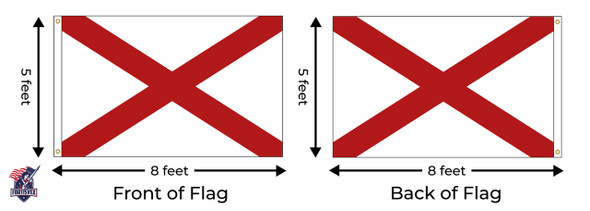
FORTISVEX Alabama State Flag 5x8 Feet Nylon - Made in USA with Brass Grommets
FORTISVEX
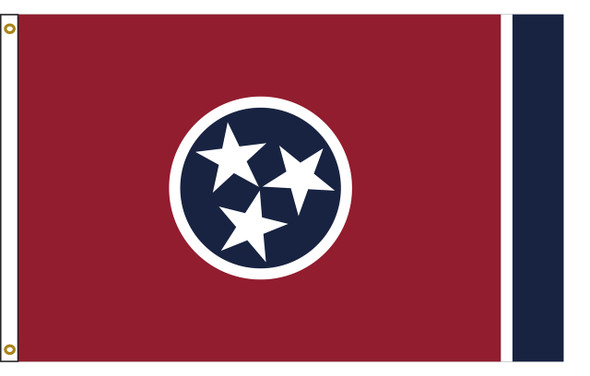
FORTISVEX Tennessee State Flag 5x8 Feet Nylon - Made in USA with Brass Grommets
FORTISVEX
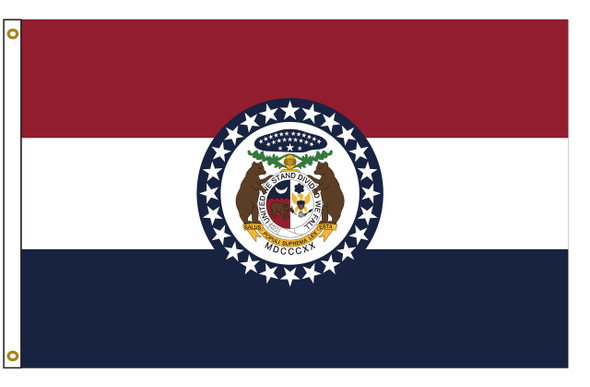
FORTISVEX Missouri State Flag 5x8 Feet Nylon - Made in USA with Brass Grommets
FORTISVEX