
Georgia History: January 2, 1788, Statehood and Its Flag
Georgia became the fourth state to ratify the United States Constitution on January 2, 1788. That anniversary marks a decisive constitutional choice, not the admission of a western territory. Georgia had already broken with Britain and organized a state government during the Revolution. Its delegates were now deciding how that state would belong to a stronger American Union. (Georgia Historical Society: ratification)
The full story stretches far beyond one winter convention. It includes ancient Indigenous communities, an ambitious colonial experiment, soldiers and farmers, forced labor and emancipation, industrial ingenuity, and citizens who demanded that American liberty mean what it promised. The Georgia flag carries that complicated inheritance. Knowing its history makes displaying it an act of informed pride rather than a matter of colors alone.
Georgia before the colony
Georgia history does not begin with an English charter. At Ocmulgee, near present-day Macon, the archaeological landscape preserves more than 12,000 years of human habitation. Successive generations built communities, cultivated land, traded, and shaped ceremonial places long before European settlement. The mounds are not evidence of a vanished people with no living descendants: the National Park Service identifies Ocmulgee as the ancestral homeland of the Muscogee (Creek) Nation, whose government is now based in Oklahoma. Beginning with that continuity changes the story from an empty frontier awaiting settlement to a homeland in which different peoples negotiated, competed, and sometimes fought over power. (National Park Service: Ocmulgee)
1732–1752: a colony built on an experiment
King George II granted Georgia its colonial charter in 1732, and James Edward Oglethorpe led settlers to Savannah in 1733. The project grew partly from Oglethorpe’s investigation of English prison conditions and concern for people trapped by poverty. But calling Georgia simply a debtor-prison colony is misleading. The Trustees selected people they believed could build viable households and contribute useful skills; the plan did not become a mass transportation scheme for imprisoned debtors. The colony was meant to offer opportunity while serving British imperial interests at the southern edge of settlement. Those aims could reinforce one another, but they were not identical. (Georgia Historical Society: the Trustees)
Savannah’s establishment also depended on Native diplomacy. Tomochichi, the Yamacraw leader, welcomed a relationship with the newcomers that could strengthen trade and his people’s position. Mary Musgrove, who had Creek and English family connections, interpreted across languages and political expectations. Their work was not a minor footnote to Oglethorpe’s arrival. It helped make settlement possible. Replacing that history with a blanket story of hostile tribes erases the choices and influence of the people already there. Cooperation was real, even though it did not prevent later colonial expansion from bringing dispossession. (Georgia Historical Society: Tomochichi)
The Trustees envisioned a society of relatively modest farms rather than a small elite controlling vast estates. Their early rules restricted landholding and prohibited slavery and rum. Their rules reveal an effort to build an orderly community around a particular model of independence. Yet an ideal designed in London had to survive local conditions, imperial rivalry, and persistent demands from settlers. Georgia’s founding therefore offers an early American argument about opportunity: whether it should be protected through firm rules or left to the ambitions of individual landowners. Neither side’s promises should be confused with equal freedom for everyone. (Georgia Historical Society: colonial experiment)
The prohibition on slavery did not endure. Its removal opened Georgia more fully to a plantation economy built on enslaved African labor, and the end of Trustee government brought a royal colonial administration. The change helped determine the state’s later wealth and its deepest injustice. A history of Georgia’s independence must keep that contradiction in view: political freedom for colonists expanded while the liberty of enslaved people was denied. The state’s later struggles over citizenship and equal protection grew from that unresolved foundation. (New Georgia Encyclopedia: slavery)
Revolution and the creation of a state
The break with Britain unfolded through institutions as well as battles. Georgia adopted provisional Rules and Regulations in April 1776, before the Declaration of Independence, and a state constitution in 1777. These documents show that self-government was already being assembled before the 1788 ratification anniversary. They also reveal how difficult independence was in practice. A revolutionary movement needed a government capable of raising support, making decisions, and claiming legitimate authority while the outcome of war remained uncertain. Liberty required more than removing a royal official; it required workable public institutions. (Georgia Archives: founding documents)
The military struggle was especially severe in the South. British forces captured Savannah in December 1778. Patriot militia won at Kettle Creek in February 1779, but the American and French assault on Savannah later that year failed. These events should not be flattened into an uninterrupted march toward victory. Georgia experienced occupation, divided loyalties, and costly setbacks. Local militia, Continental troops, and overseas allies all belonged to the wider struggle. Remembering their persistence makes the eventual achievement of independence more substantial, not less patriotic. (National Park Service: Revolution timeline)
January 2, 1788: why Georgia ratified the Constitution
Georgia’s convention met in Augusta, then the state capital. Its 26 delegates approved the proposed federal Constitution unanimously and signed the ratification ordinance on January 2, 1788. Commercial interests along the coast favored a government better able to manage trade. State leaders also wanted stronger federal support in dealing with the Creek Nation and disputes over land. These were practical calculations, not merely ceremonial enthusiasm. Ratification joined hopes for prosperity and security to a new constitutional structure, while Native communities had their own interests that Georgia’s delegates did not represent. (Georgia Historical Society: ratification)
Fourth in the ratification sequence did not mean that the new federal government began operating that day. Article VII required nine states to ratify before the Constitution would take effect among the ratifying states. Georgia followed Delaware, Pennsylvania, and New Jersey; Connecticut followed a week later. The distinction matters when teaching statehood. The original states helped establish the constitutional Union through ratification. Later states generally entered through an admission process controlled by Congress. Georgia’s anniversary celebrates participation in the founding compact, not promotion from territorial government. (National Archives: Constitution history)
Cotton, expansion, and the cost of land
In 1793, while in Georgia, Eli Whitney developed a cotton gin that accelerated the removal of seeds from cotton fiber. A machine that reduced one bottleneck did not eliminate the enormous demand for field labor. Instead, the expansion of cotton cultivation intensified slavery and increased pressure for land. The Eli Whitney Museum connects the invention’s legacy to both forced labor and Native dispossession. Georgia’s economic growth must therefore be measured in more than bales and profits. It also meant families sold apart, workers coerced, and communities pushed from places they had long called home. (Eli Whitney Museum: cotton gin)
Muscogee land cessions steadily reduced Native control in Georgia. The Ocmulgee region, once central to Muscogee life, became a landscape of treaties, contested boundaries, and forced relocation. Removal did not end Muscogee nationhood. Communities rebuilt in Indian Territory, and the name Okmulgee, now associated with the nation’s Oklahoma capital, preserves a connection to the older homeland. Presenting this as the disappearance of an Indian population misses the central fact: a living people survived the loss of land and continued its political and cultural life. (National Park Service: Muscogee Nation)
In north Georgia, Cherokee people challenged encroachment through diplomacy, political organization, and legal resistance. The Treaty of New Echota in 1835 was signed by a minority without the support of the principal Cherokee leadership. Federal authorities nevertheless used it to justify removal. The forced journeys of 1838–1839 became part of the Trail of Tears. This history puts a hard question beside every celebration of constitutional freedom: what happens when government power overwhelms the rights of a people whose consent has not been obtained? A confident patriotism can face that question honestly. (National Park Service: Cherokee removal)
Civil War, emancipation, and Reconstruction
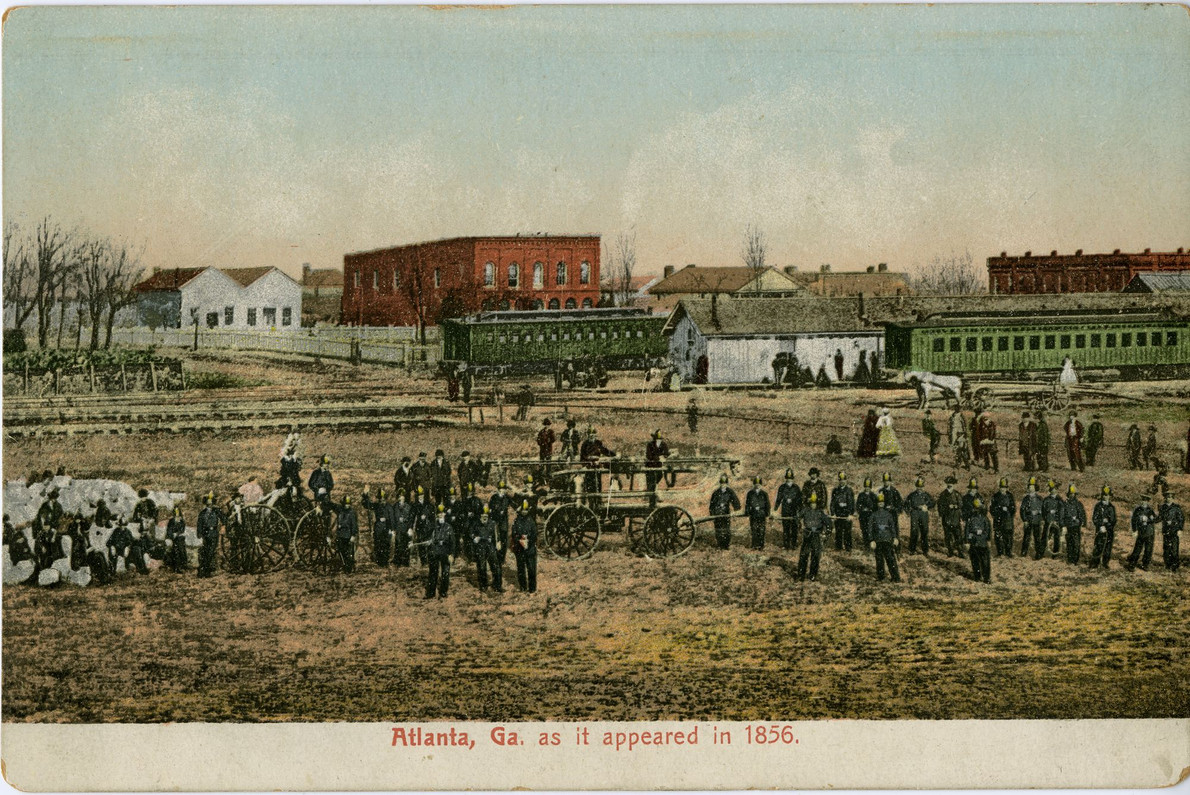
Railroads transformed Georgia before the Civil War, and Atlanta began as the rail terminus called Terminus in 1837. That transport network later made the state strategically important to the Confederacy. Georgia seceded on January 19, 1861. In 1864, Union forces took Atlanta, and William T. Sherman’s subsequent campaign crossed the state toward Savannah. The destruction of military resources and civilian property left deep scars. Union victory also broke the power of a slaveholding rebellion and helped bring emancipation to hundreds of thousands of Georgians. The same campaign could signify devastation to one household and the possibility of freedom to another. (New Georgia Encyclopedia: Georgia history)
Reconstruction was a struggle over what freedom would mean in daily life. Formerly enslaved people sought education, paid work, secure families, land, and political participation. New constitutional arrangements and Black officeholding challenged the old order, while violence and organized white resistance worked to restore it. Georgia’s restoration to congressional representation was not a simple, uninterrupted process; its final restoration came in 1870. The subsequent erosion of Black political rights shows why emancipation and equal citizenship must not be treated as interchangeable achievements. Ending ownership of human beings was indispensable, but protecting free people required a continuing contest over law and power. (New Georgia Encyclopedia: Reconstruction)
From cotton country to an industrial state
The twentieth century exposed the risks of dependence on one crop. The boll weevil reached Georgia in 1915 and damaged the cotton economy for decades. Farmers confronted lost harvests and the need to change practices, while rural households looked for other livelihoods. Agricultural change was not simply the invention of a new machine or the arrival of a pest. It altered where people could earn a living and which communities could retain their young workers. The eventual control of the boll weevil belongs to a longer history of research, cooperation, and adaptation in Georgia agriculture. (New Georgia Encyclopedia: boll weevil)
World War II gave Georgia workers a direct role in sustaining Allied forces. Shipyards at Savannah and Brunswick produced 173 Liberty Ships, merchant vessels intended to carry the supplies on which fighting armies depended. The first Savannah-built ship, the S.S. James Oglethorpe, launched in November 1942. Shipbuilding connected local craftsmanship and industrial labor to a global struggle. It also offers a useful reminder about service: victory depended not only on those carrying weapons overseas but on welders, shipwrights, transport workers, and families sustaining production at home. (Georgia Historical Society: Liberty Ships)
Atlanta became an increasingly important center of business and transportation after the war. Its growth culminated in a worldwide showcase when the city hosted the 1996 Summer Olympics. That international visibility did not make the rest of Georgia an afterthought: the state remained a network of cities, farms, industrial towns, ports, and smaller communities with different economic needs. Modern Georgia developed through connections among those places, not through a single city replacing everything that came before it. (New Georgia Encyclopedia: Atlanta)
Civil rights and Georgia’s modern reach
Atlanta’s Sweet Auburn neighborhood nurtured Black businesses, churches, and civic leadership under segregation. Martin Luther King Jr. grew up there and later returned to help lead the Southern Christian Leadership Conference while serving at Ebenezer Baptist Church. His work linked Georgia to the national struggle for civil rights. The movement’s constitutional importance is plain: citizens organized, spoke, worshiped, petitioned, and challenged government to protect their equal rights. Its story expands the meaning of American patriotism by insisting that the country’s founding promises belong to all its people. (National Park Service: King and Atlanta)
Georgia’s present-day global connections are visible at its ports. The Georgia Ports Authority was established in 1945, and Savannah’s later development in container shipping connected inland businesses to international markets. Brunswick developed a major role in moving vehicles and other cargo. As a dated measure of scale, the authority reported 5.7 million twenty-foot equivalent container units for fiscal year 2025. That figure describes a particular reporting year, not a permanent ranking or prediction. The larger historical point is durable: Georgia’s rivers, railways, roads, and ports have repeatedly turned geography into economic opportunity. (Georgia Ports Authority: history)
Georgia flag history: separate the designs and dates
Georgia’s first official state flag was adopted in 1879, long after ratification. It paired a vertical blue band at the hoist with red-white-red horizontal bars. In 1902, lawmakers directed that the state coat of arms appear on the blue field. Manufacturers produced variations, and versions using the complete state seal became common in the early twentieth century. Those intermediate changes do not all have a precise legislative adoption date. In 1956, Georgia replaced the bars with a large Confederate battle emblem. That change occurred amid official resistance to school desegregation; reducing it to a neutral Civil War commemoration leaves out essential context. (New Georgia Encyclopedia: state flags)
The 1956 flag remained until 2001. Its replacement was a blue flag dominated by a gold state seal and a ribbon of small historical flags. That intermediate design lasted only until 2003. It is important not to reverse these two changes: the blue historical-banner flag came first, and the red-white-red design used today came afterward. A dated reproduction should be labeled by the period it represents, not sold or described as though every former Georgia banner were the current state flag. (Georgia Historical Society: 2001–2003 flag)
The current Georgia flag was adopted on May 8, 2003. It has three horizontal bands, red, white, and red, with a blue canton containing thirteen white stars around the gold coat of arms and the words “In God We Trust.” The stars represent Georgia and the other twelve original states. The design is based on the Confederate First National flag, commonly called the Stars and Bars, not on the diagonal-cross battle flag. Acknowledging that lineage and explaining the stars’ official meaning are both necessary for an accurate account. The emblem in the canton is the coat of arms, not the entire circular state seal. (Georgia Secretary of State: flag history)
The arms turn the eye toward government under law. Three pillars support an arch marked “Constitution,” representing the legislative, judicial, and executive branches. “Wisdom,” “Justice,” and “Moderation” express the virtues associated with the design. A figure with a drawn sword symbolizes defense of the Constitution. These details give the flag a useful civic reading: strength is not an end in itself, and public power is supposed to uphold a constitutional order. That interpretation should complement the documented design history, not replace it with an invented legend. (Georgia Senate: the Great Seal)
Georgia history and flag FAQs
Was Georgia admitted to the Union on January 2, 1788?
That is its conventional statehood anniversary, but the exact action was ratification of the U.S. Constitution. Georgia was an original state, not a federal territory awaiting admission. (National Archives: Constitution history)
Did Georgia fly its current flag during the Revolution?
No. The current design dates to 2003. It should never be used as a period-correct illustration of Georgia’s Revolutionary soldiers or its 1788 convention. (Georgia Secretary of State: flag history)
Is the Georgia state flag the same as the country of Georgia’s flag?
No. This article concerns the American state. When choosing a flag, confirm that the listing identifies the U.S. state and shows the intended current or historical design. A shared place-name does not make the two flags interchangeable.
Choose a Georgia flag with the history in mind
Explore Georgia state flags at FORTISVEX for a home, classroom, office, or civic display. Check the individual listing for dimensions, fabric, mounting, and intended indoor or outdoor use. For a historical presentation, identify the year being represented before selecting a reproduction. An accurate label can do as much educational work as the flag itself. Whether your interest begins with January 2, constitutional government, military service, or family roots, the strongest tribute is one grounded in the real story.
Recent Posts
-
Why a Flag Emoji Can Appear as Two Letters
You send a country flag in a message, but another person sees two letters or a missing symbol. Befo …Nov 4th 2026 -
New Meadows, Idaho: The Depot That Kept Finding a Purpose
A railway depot can explain more than a train route. In New Meadows, the Pacific & Idaho Northern de …Nov 4th 2026 -
Winchester, Idaho: A Sawmill Record and a Lake's Changing Story
A photograph's date can open a local-history story, but it cannot tell the whole story by itself. I …Nov 4th 2026